← all heritage / Egypt
Egypt · Living Traditions
Temple
of Amun-Re at Karnak
See it in practice
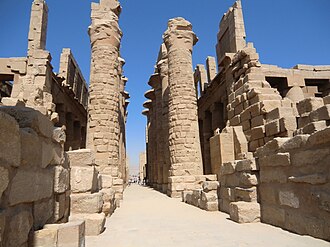
▶ View recordingOne of the largest and most significant temple complexes in ancient Egypt, located near Luxor. Spans over 200 acres, including temples, chapels, pylons, and monuments. Notable for the Great Hypostyle Hall with 134 massive columns. Follows a typical Egyptian temple plan with pylons leading to inner sanctuaries. Includes a Sacred Lake for ritual purification. Walls and columns adorned with intricate carvings and hieroglyphs depicting religious scenes, royal achievements, and mythological narratives.
Testimony
Testifies to advanced architectural, engineering, and artistic skills of ancient Egyptians. Reflects continuity and evolution of religious and cultural practices. Records achievements of pharaohs and their devotion to gods. Carvings and hieroglyphs provide insights into religious beliefs, rituals, and daily life, highlighting the importance of water and purification.
“
A source of immense pride as a symbol of ingenuity, devotion, and artistic mastery of the African people. Sheer size, architectural complexity, and historical significance make it a source of national pride for Egypt and a testament to Africa's rich cultural heritage. Attracts scholars, historians, and tourists, contributing to a greater appreciation and understanding of ancient Egyptian culture.
Academic source
ArchitectureCourses.org<br>UCLA Encyclopedia of Egyptology<br>Encounters Travel
Citations
[1] https://www.architecturecourses.org/learn/temple-amun-re-karnak-architecture [2] https://www.istockphoto.com/photos/temple-of-amun [3] https://escholarship.org/content/qt1f28q08h/qt1f28q08h.pdf [4] https://www.encounterstravel.com/blog/hypostyle-hall [5] https://en.wikipedia.org/wiki/Precinct_of_Amun-Re [6] https://www.tripsinegypt.com/blog/egypt-attractions/luxor-attractions/temple-of-amun/ [7] https://smarthistory.org/temple-of-amun-re-and-the-hypostyle-hall-karnak/ [8] https://en.wikipedia.org/wiki/Karnak [9] https://www.khanacademy.org/humanities/ap-art-history/ancient-mediterranean-ap/ancient-egypt-ap/a/karnak [10] https://www.wmf.org/project/karnak-temple [11] https://www.memphis.edu/hypostyle/welcome/ [12] https://www.britannica.com/place/Great-Temple-of-Amon [13] https://www.gettyimages.co.uk/photos/temple-of-amun-re [14] https://www.memphis.edu/hypostyle/pdfs/commentary.pdf
Archive record
Other traditions of Egypt
The tradition lives on many forms.